Project overview
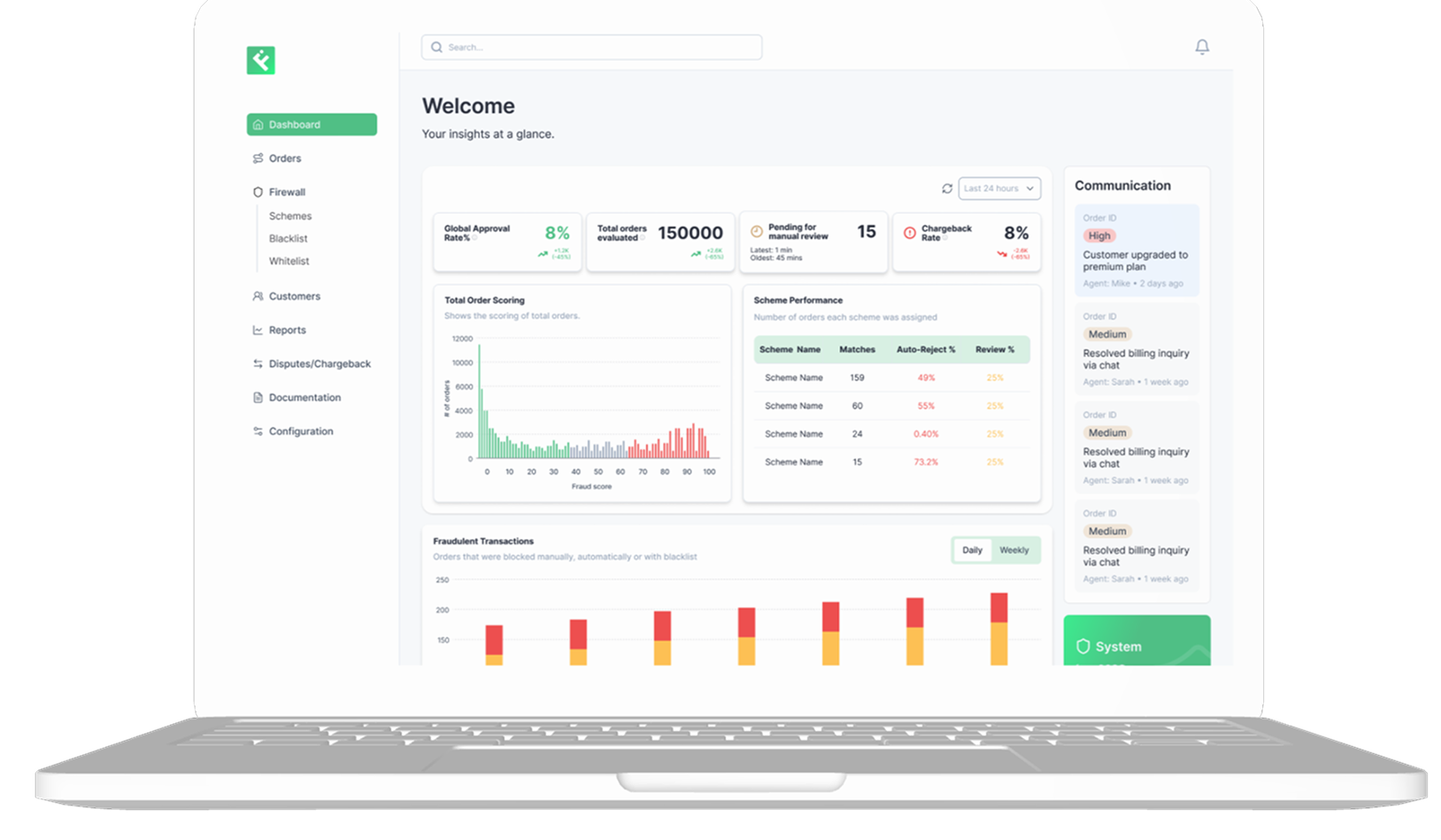
An AI-powered fraud detection platform that helps payment and risk teams analyze transactions, identify suspicious behavior and make faster decisions. Machine-learning models score transactions in real time, while analysts review the cases that need human oversight.
The Problem
Competitor research highlighted complex interfaces, dense dashboards, scattered workflows and critical information hidden behind multiple levels of navigation. These obstacles slow fraud investigations.
Solution
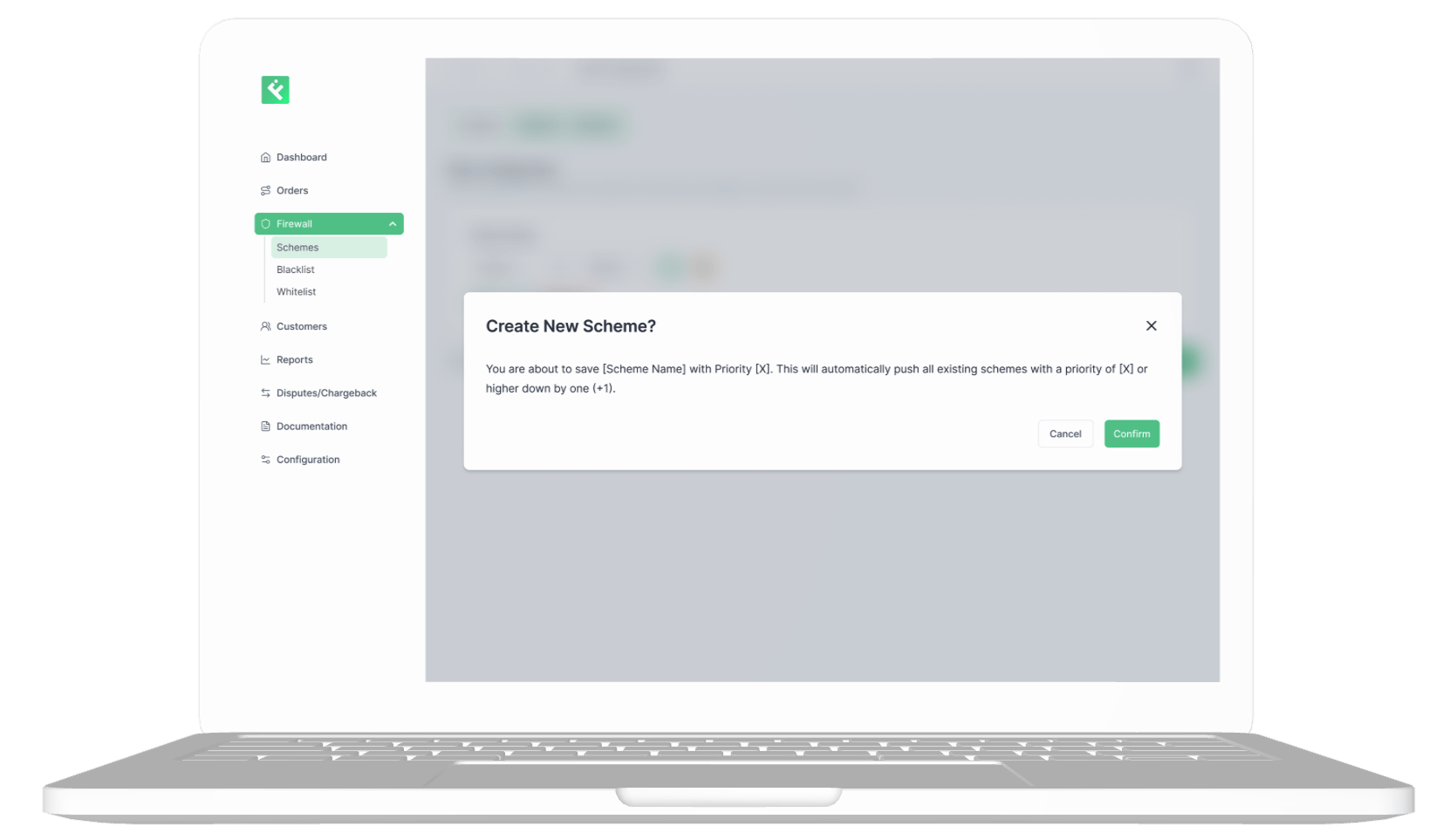
A streamlined investigation experience focused on daily analyst tasks, with clearer decisions, less cognitive load and centralized workflows.


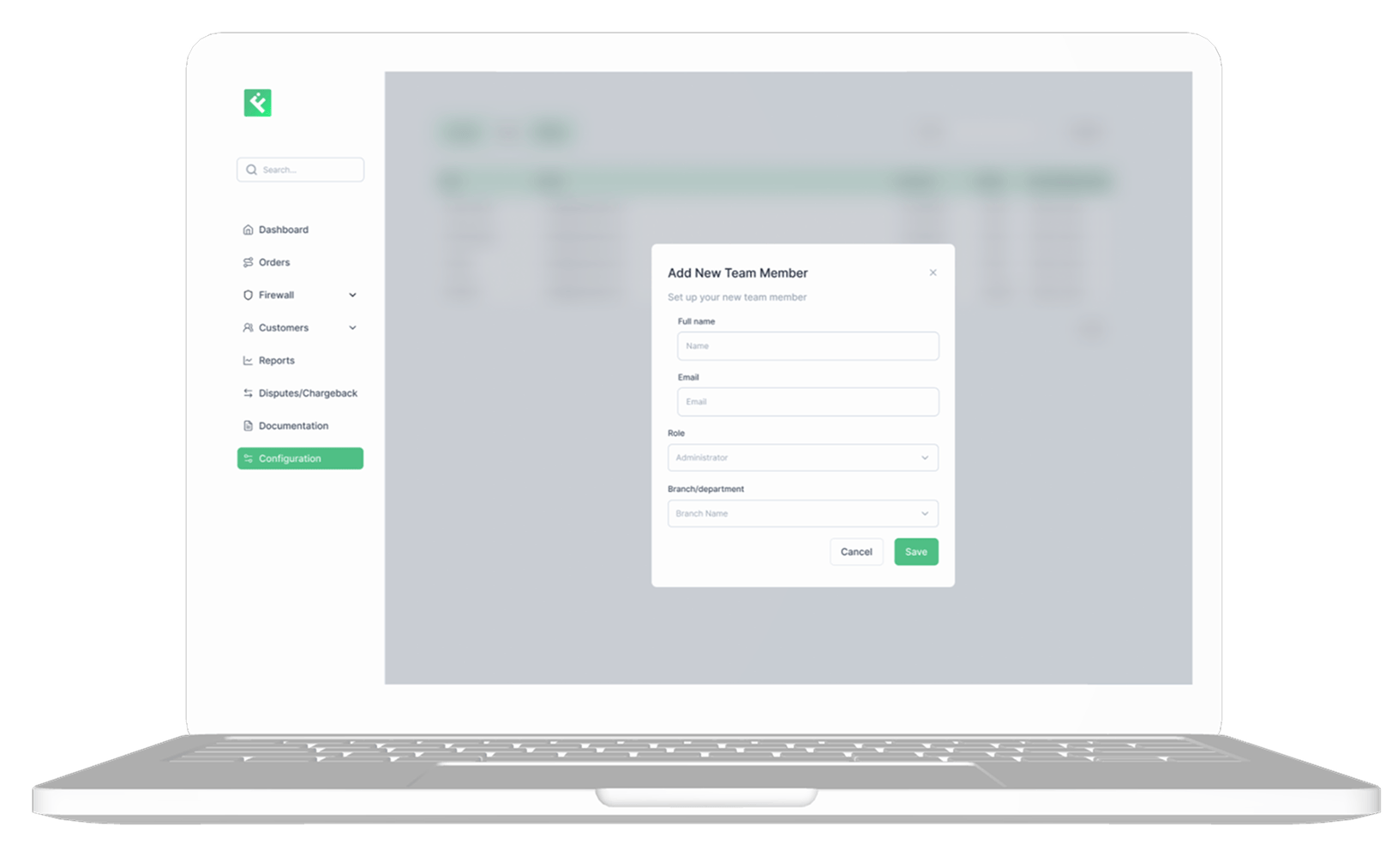
Competitor Research & User Journey
Research into competing fraud platforms revealed complex configuration, fragmented navigation and unclear access to important information. Mapping an analyst’s journey identified points of friction and opportunities to simplify the investigation process.

Product Information Architecture
The platform is structured around three core areas:
- Fraud Monitoring — transaction analytics and overview dashboards
- Orders Workspace — flagged transactions and customer profiles
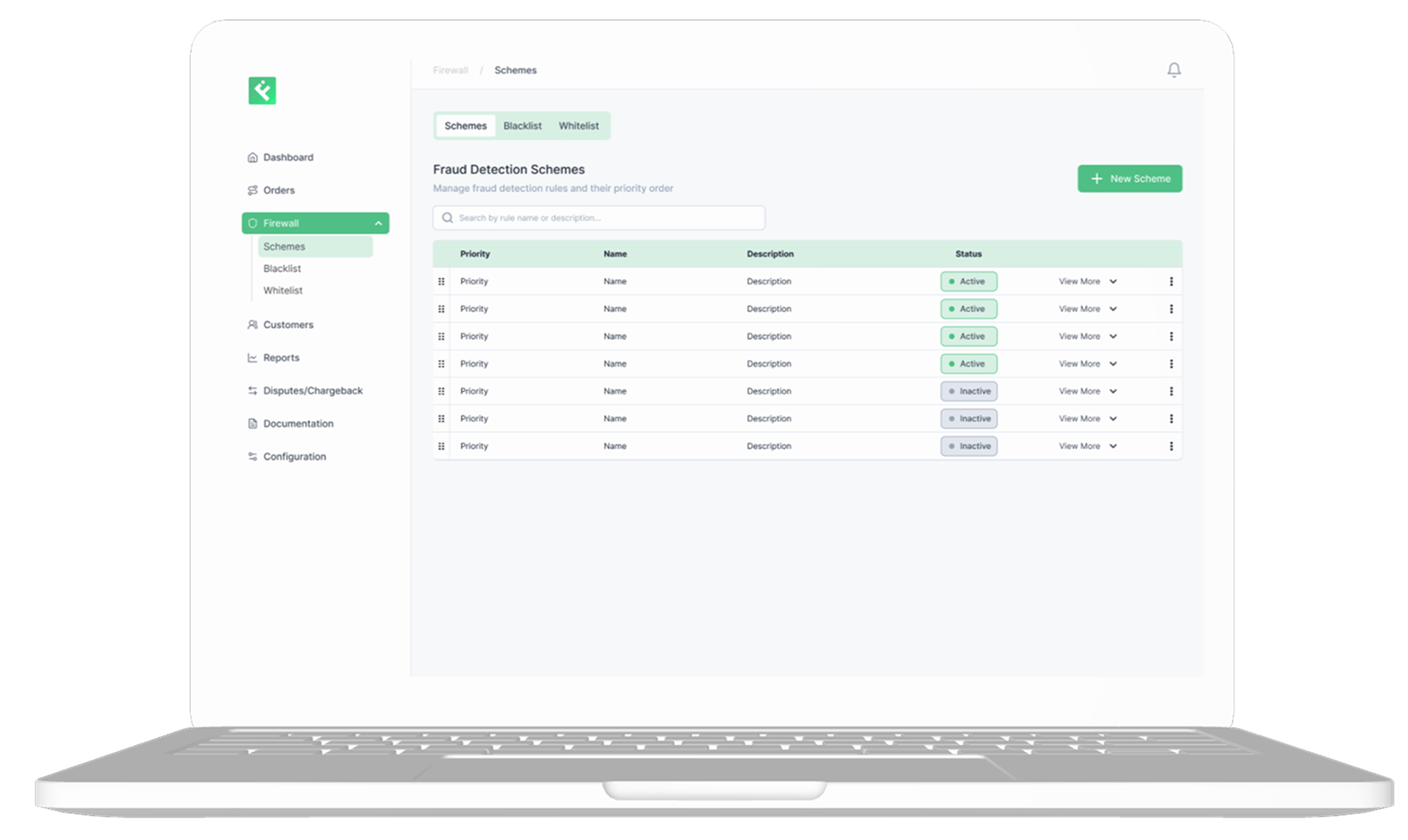
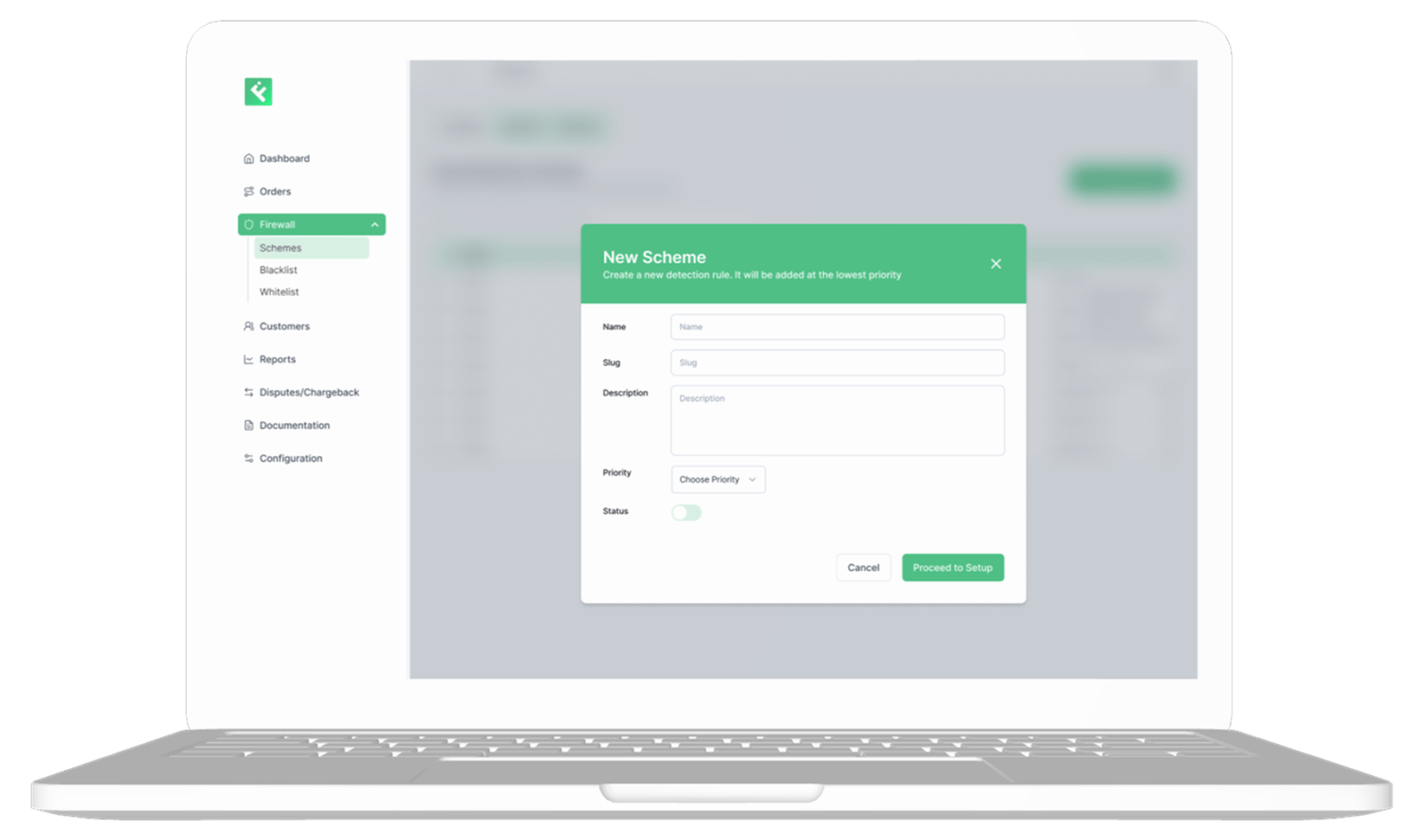
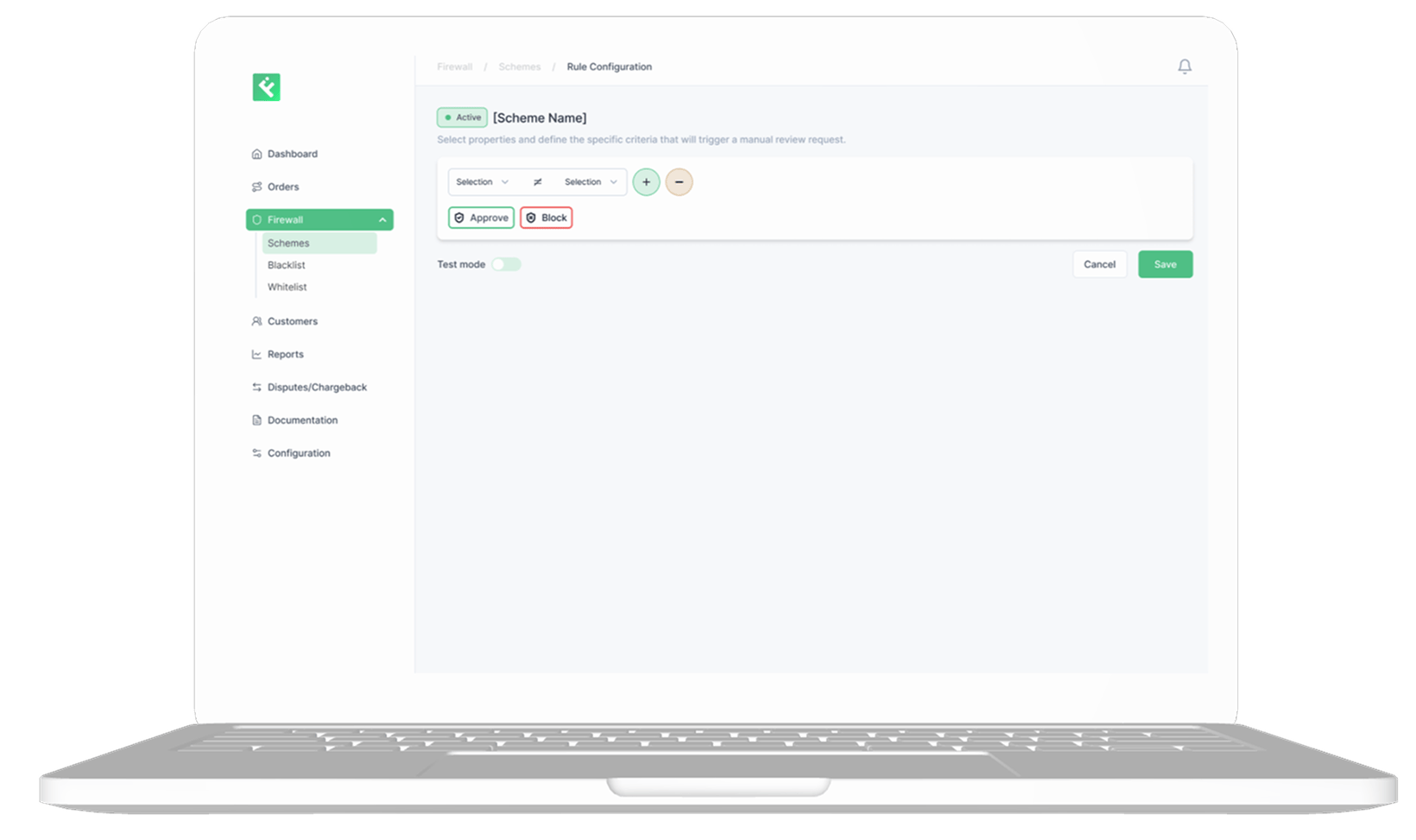
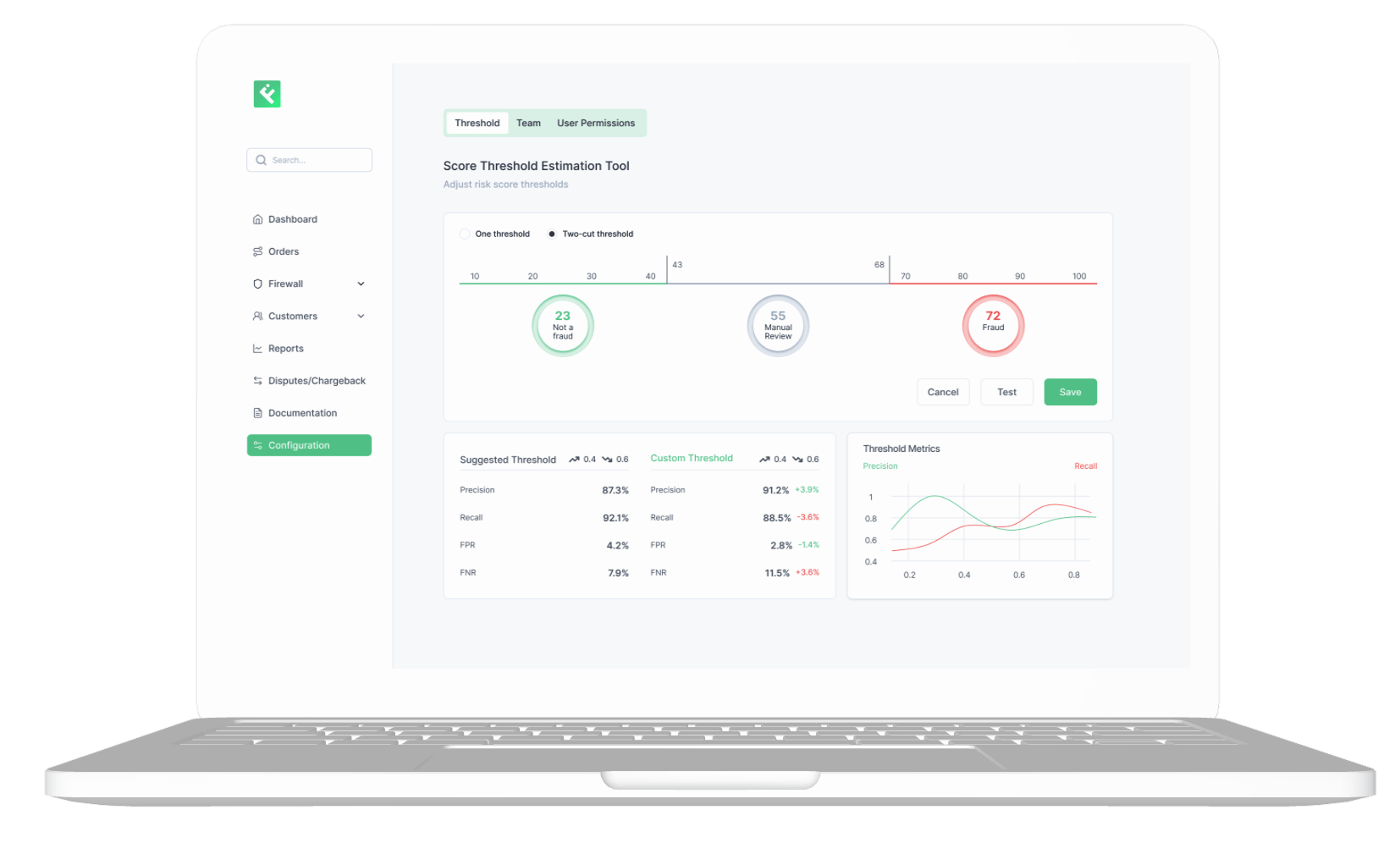
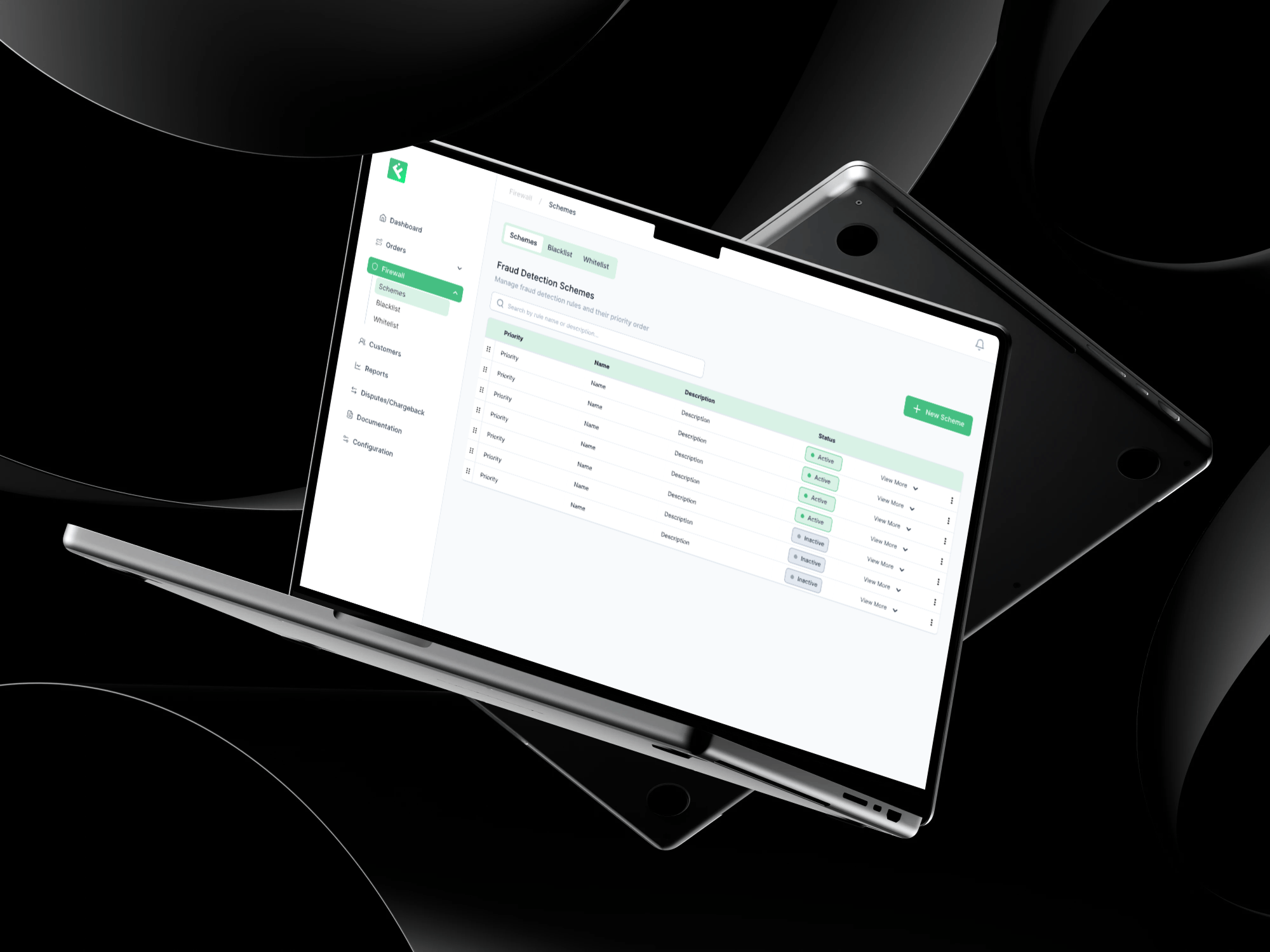
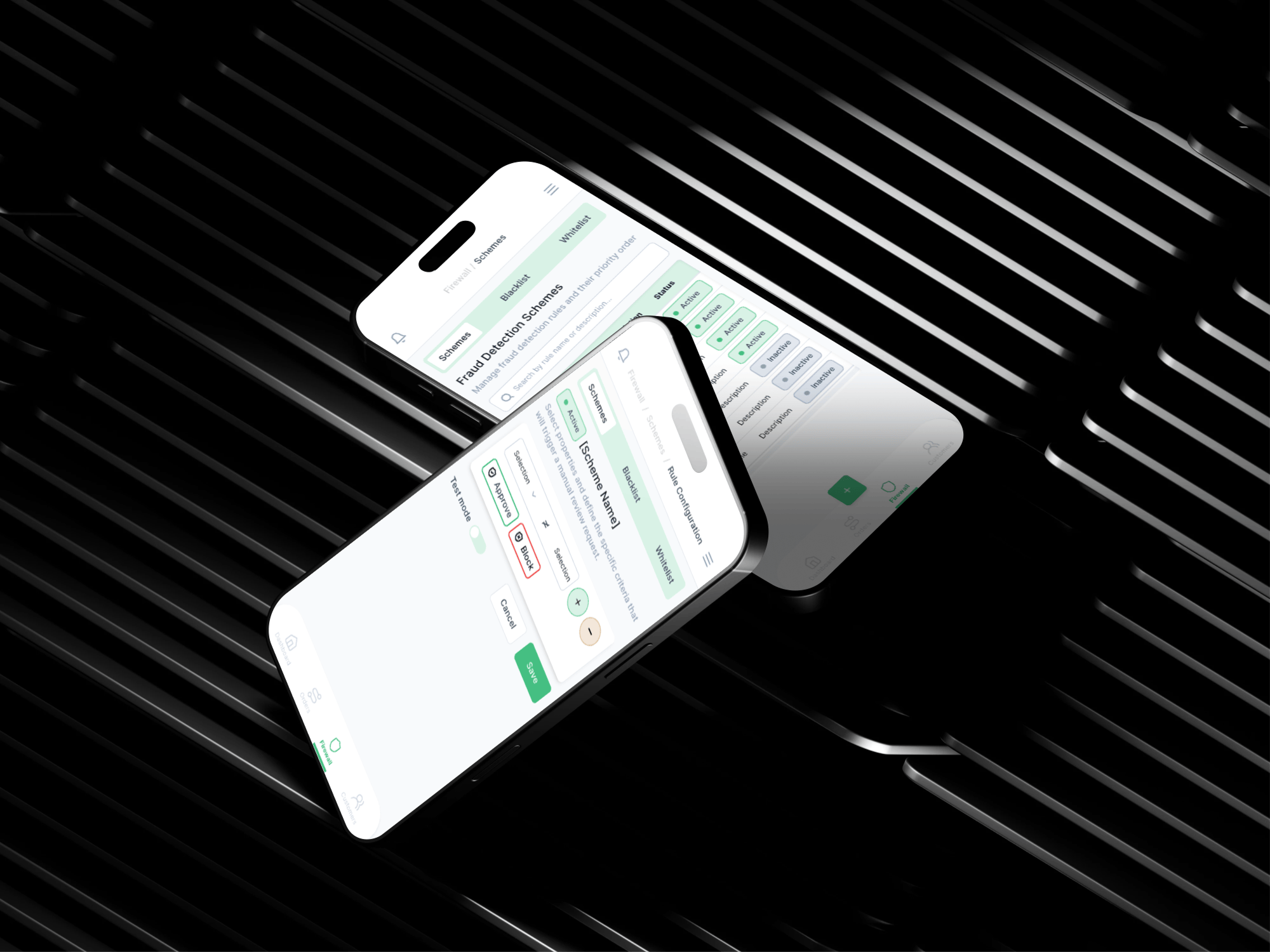
- Firewall / Rules Engine — prevention and configuration rules


User Flows
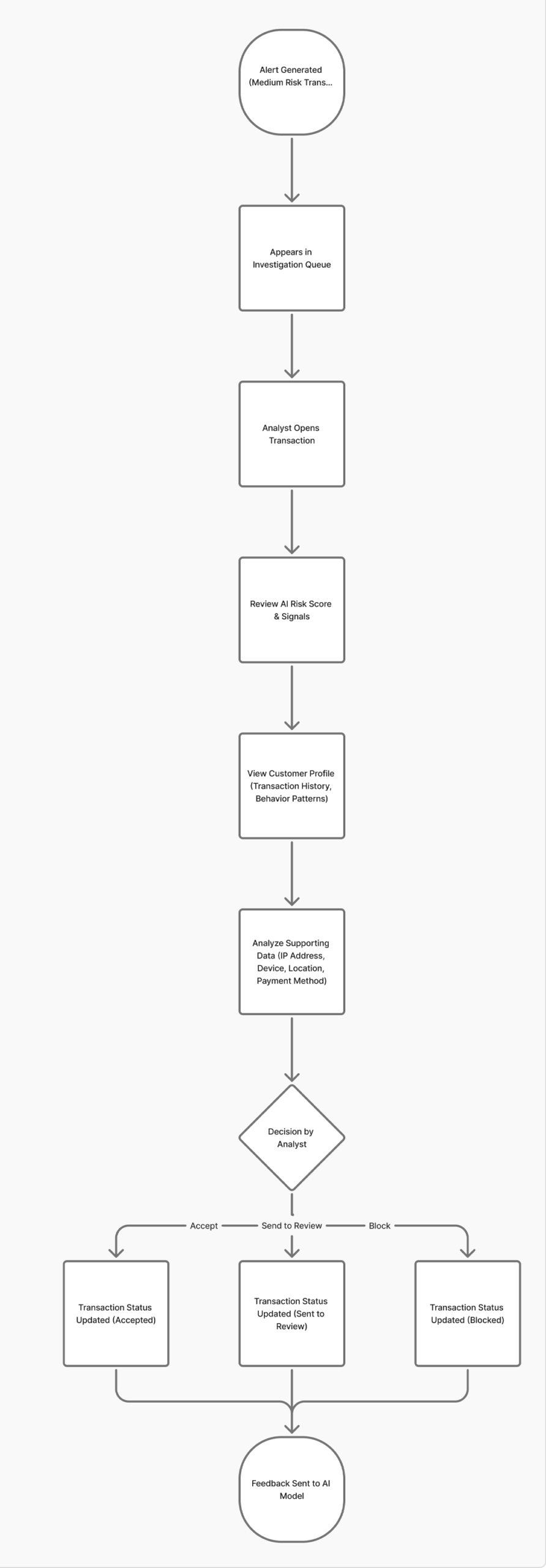
The investigation flow maps how analysts review alerts, inspect transaction risk, and accept, review or block transactions.
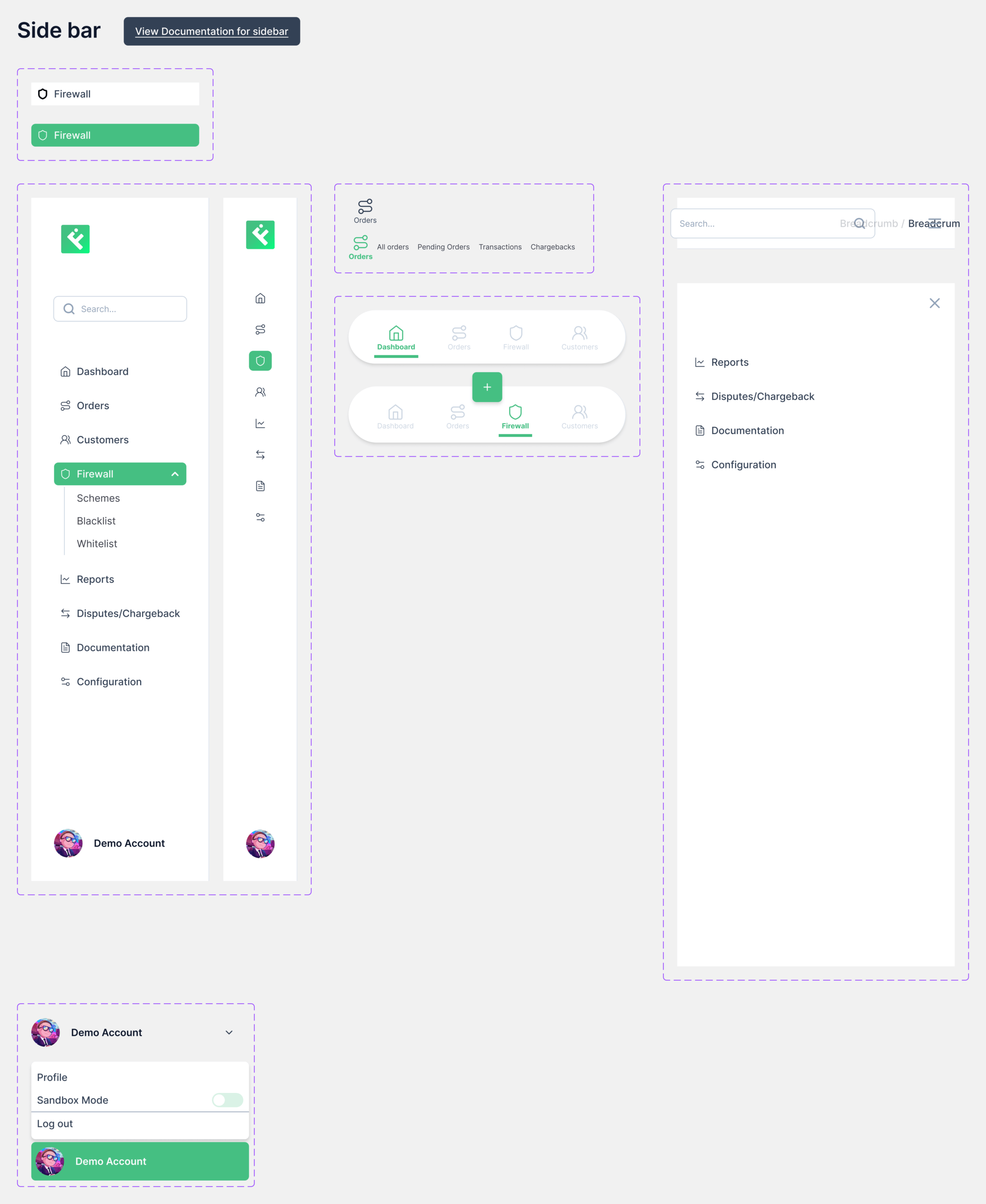
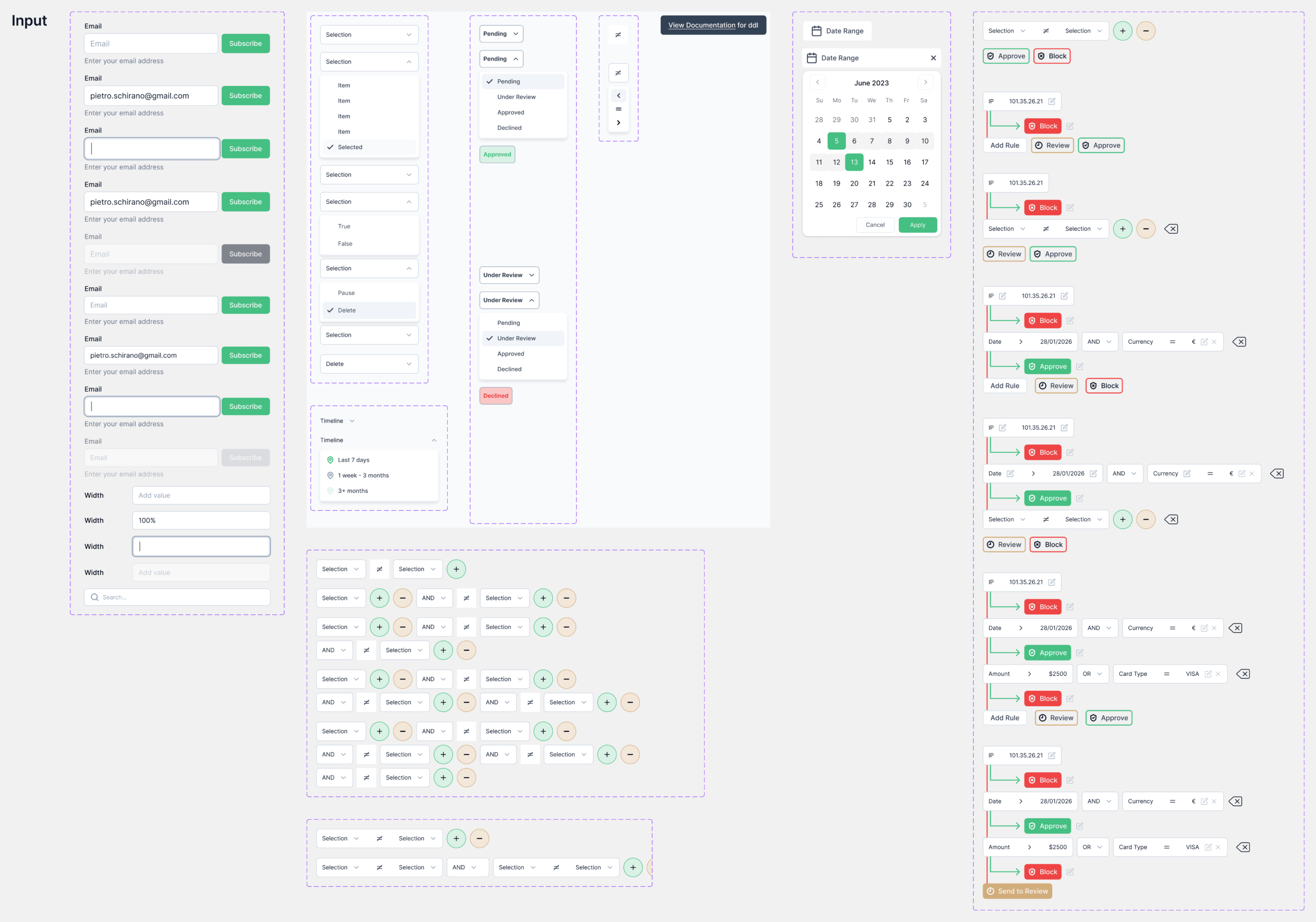
Design System & UI Architecture
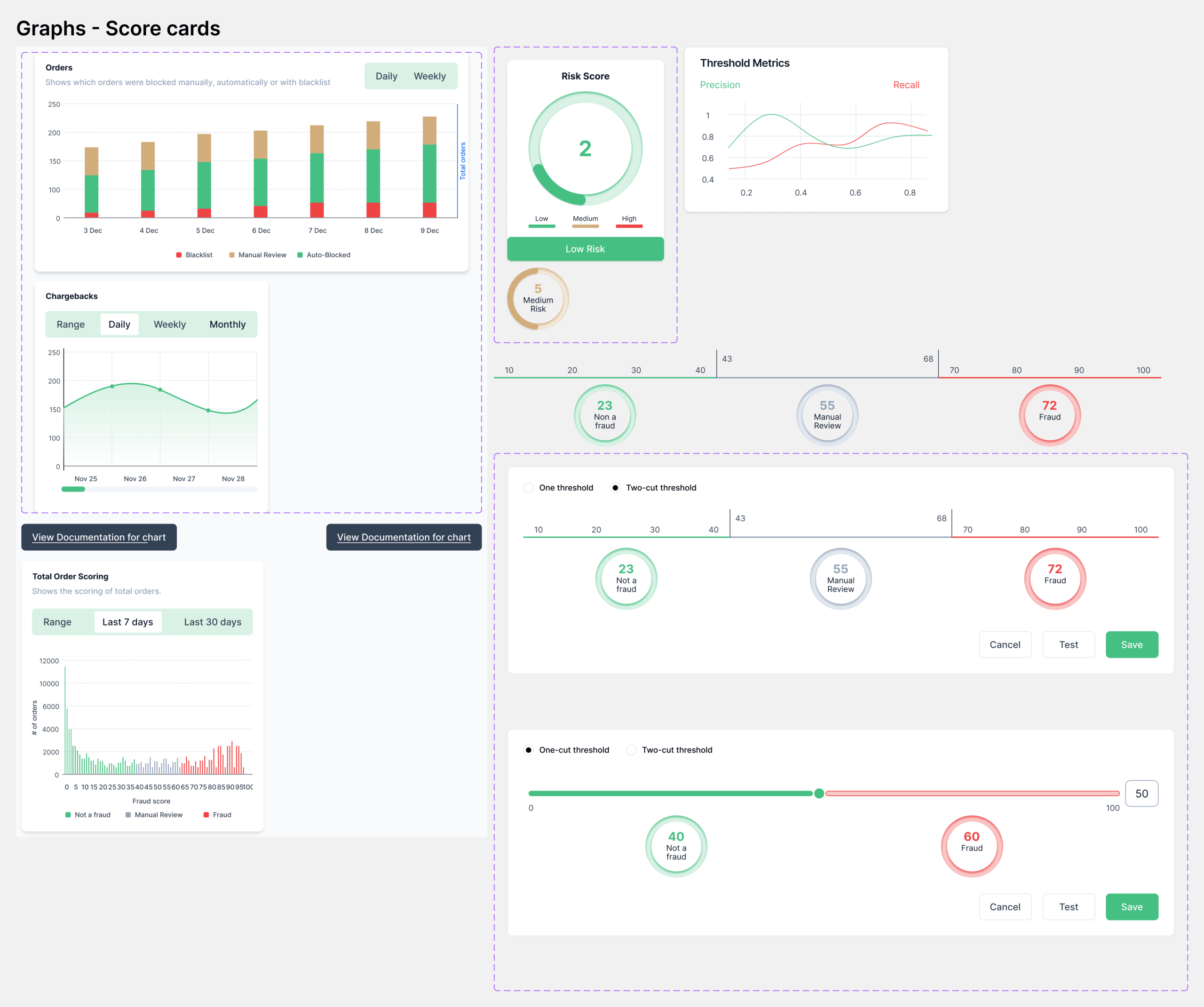
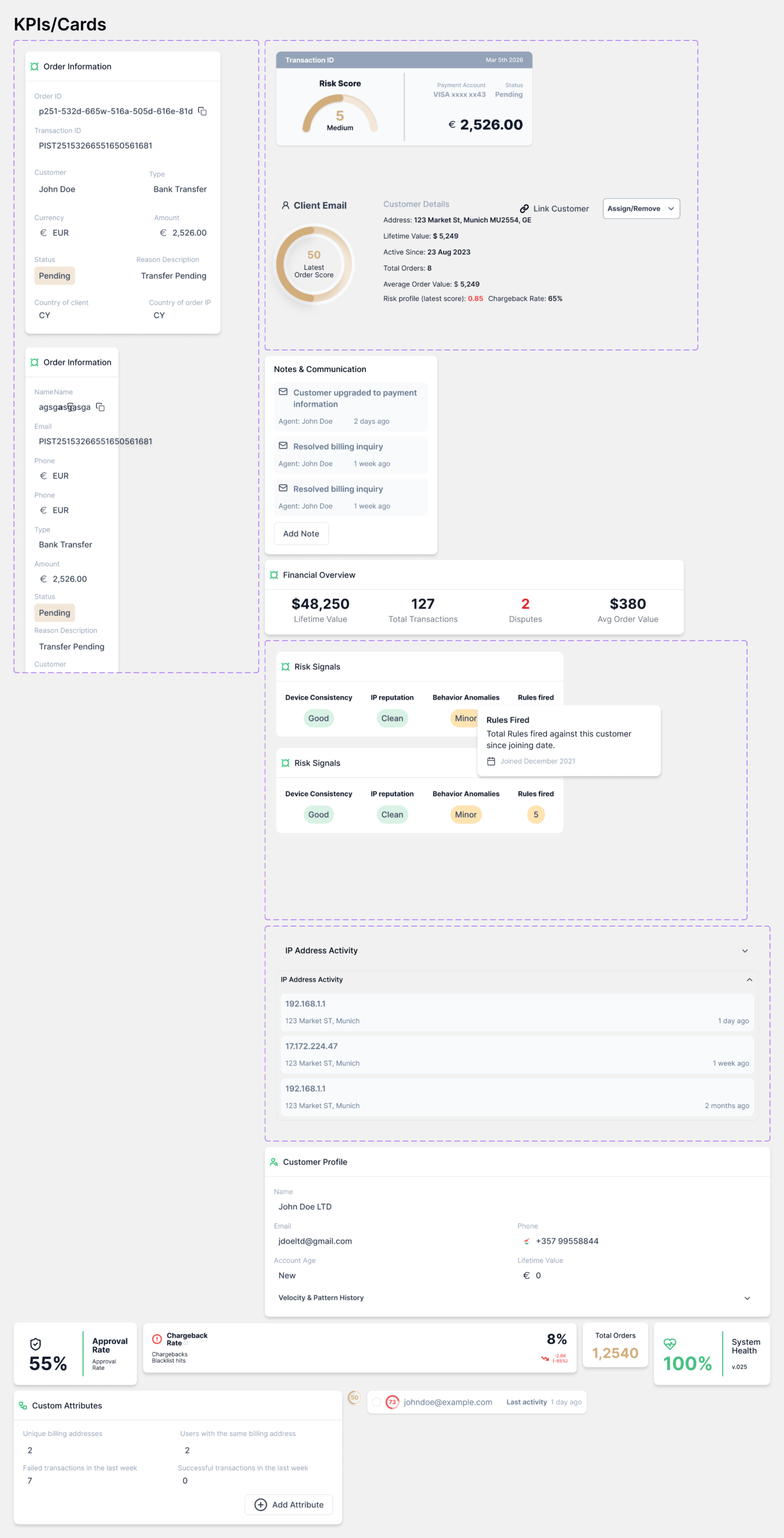
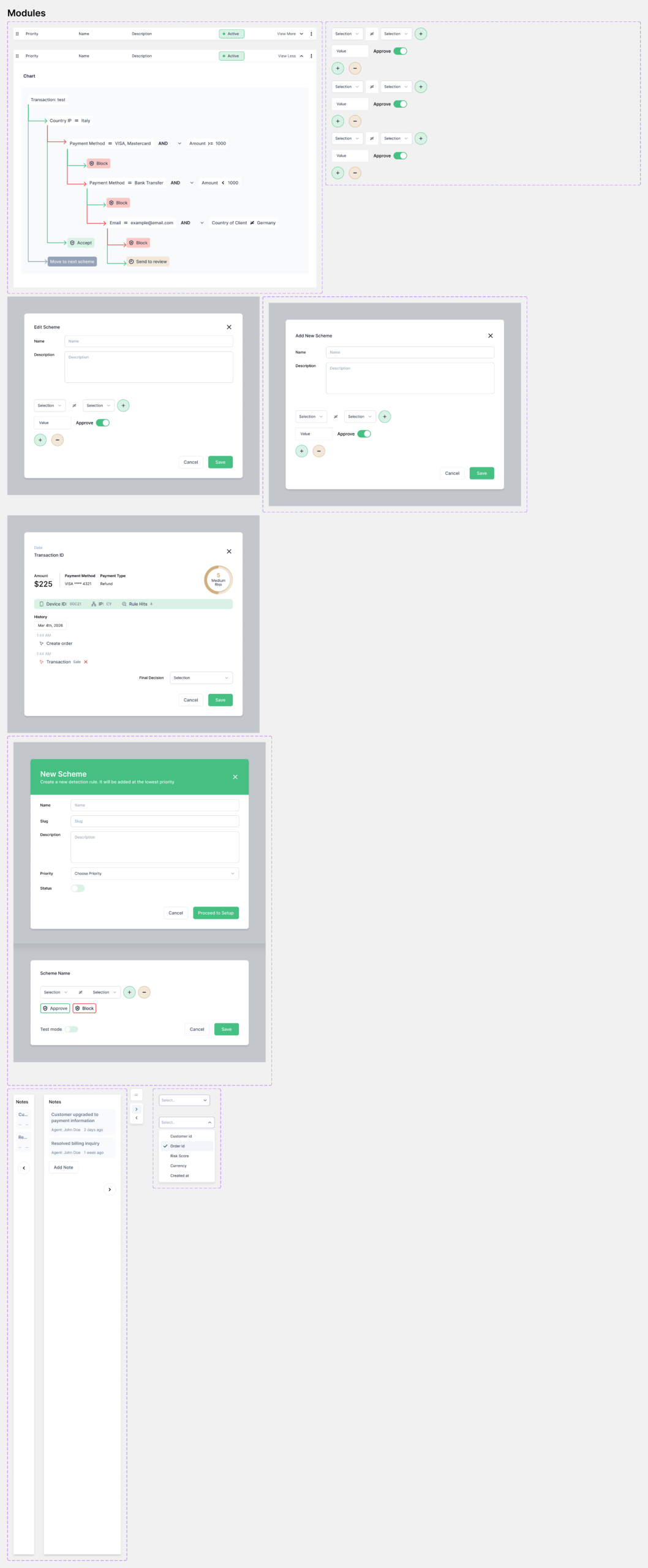
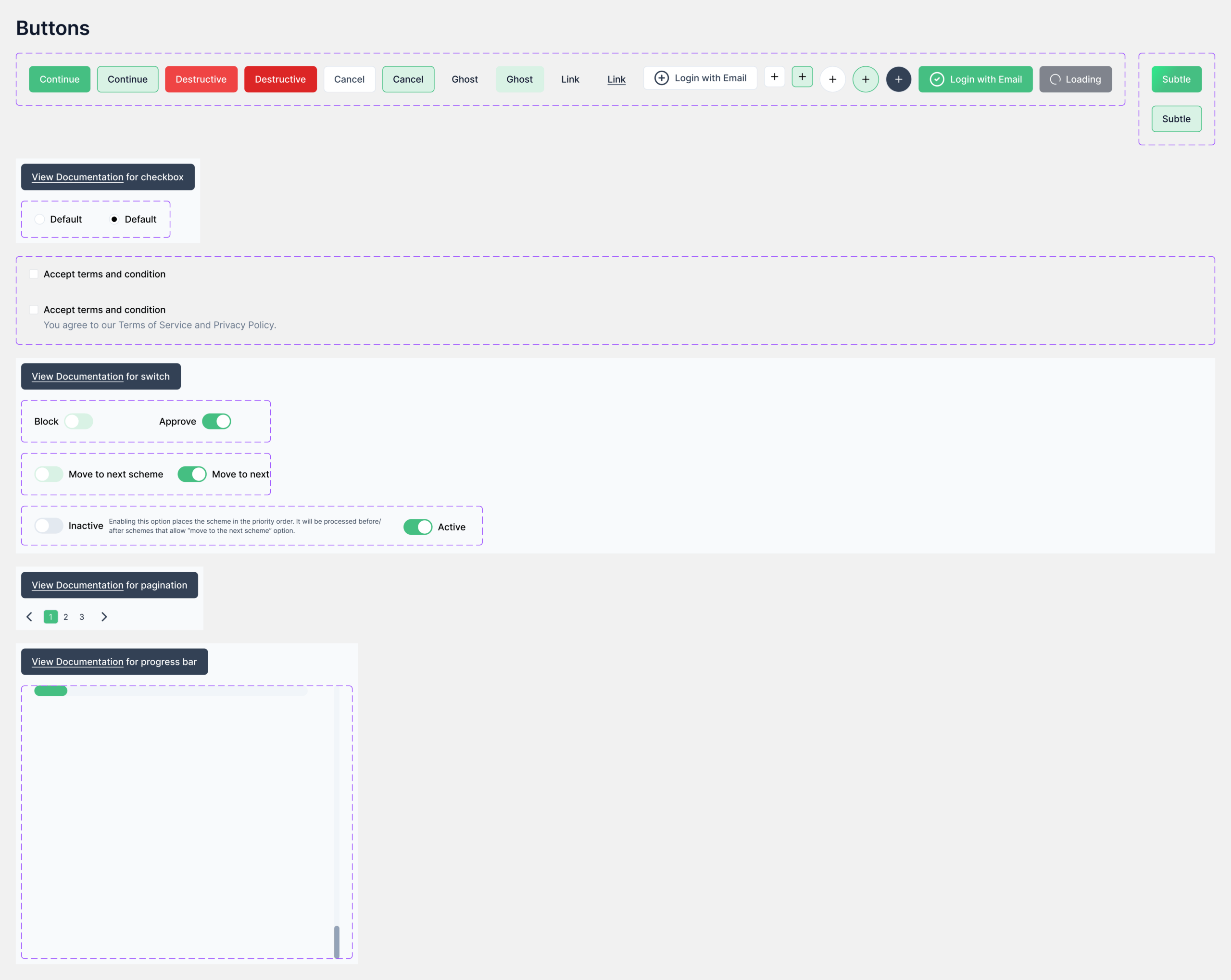
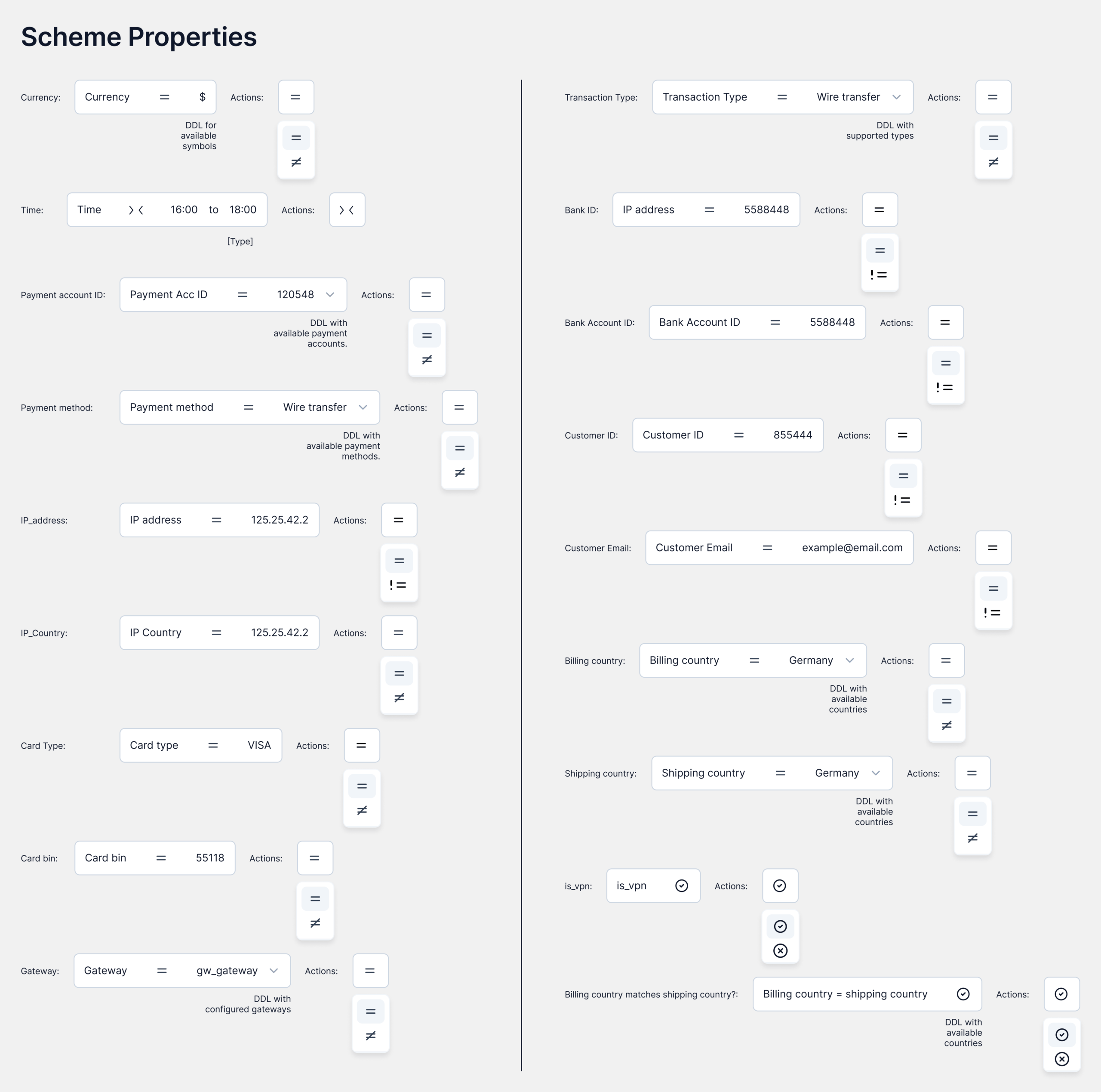
A structured design system based on Shadcn UI components and Lucide icons supports a scalable, data-heavy product while keeping patterns consistent for developers.



Wireframes & Prototyping
Low-fidelity wireframes explored layout options and interaction patterns before moving to detailed visual design.


Project Status
The platform remains under active development. Its core investigation workflows, dashboard and rules engine have been defined and prototyped.
What Comes Next
- Expand AI explainability for risk decisions
- Refine fraud analytics and reports
- Conduct usability testing with analysts
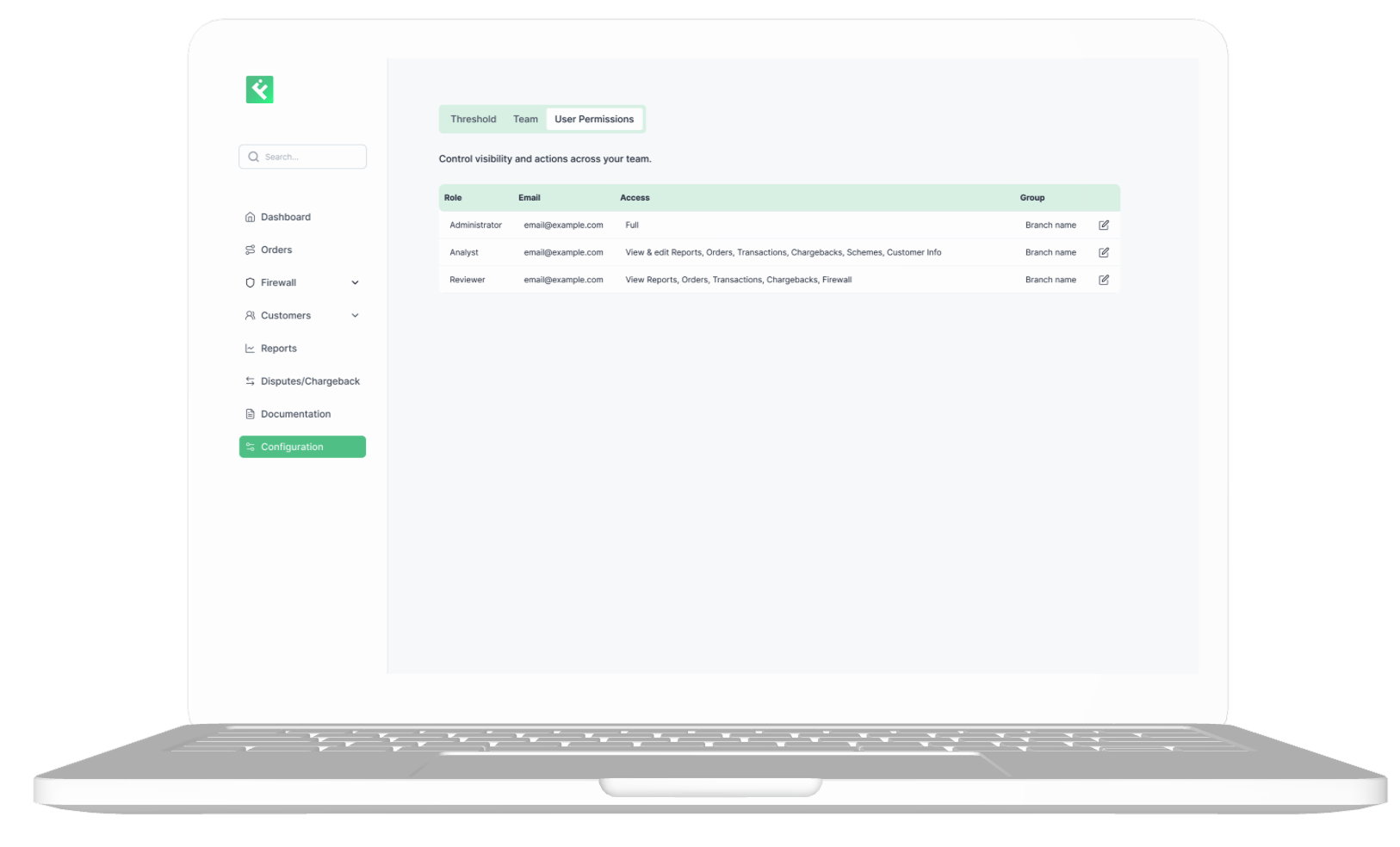
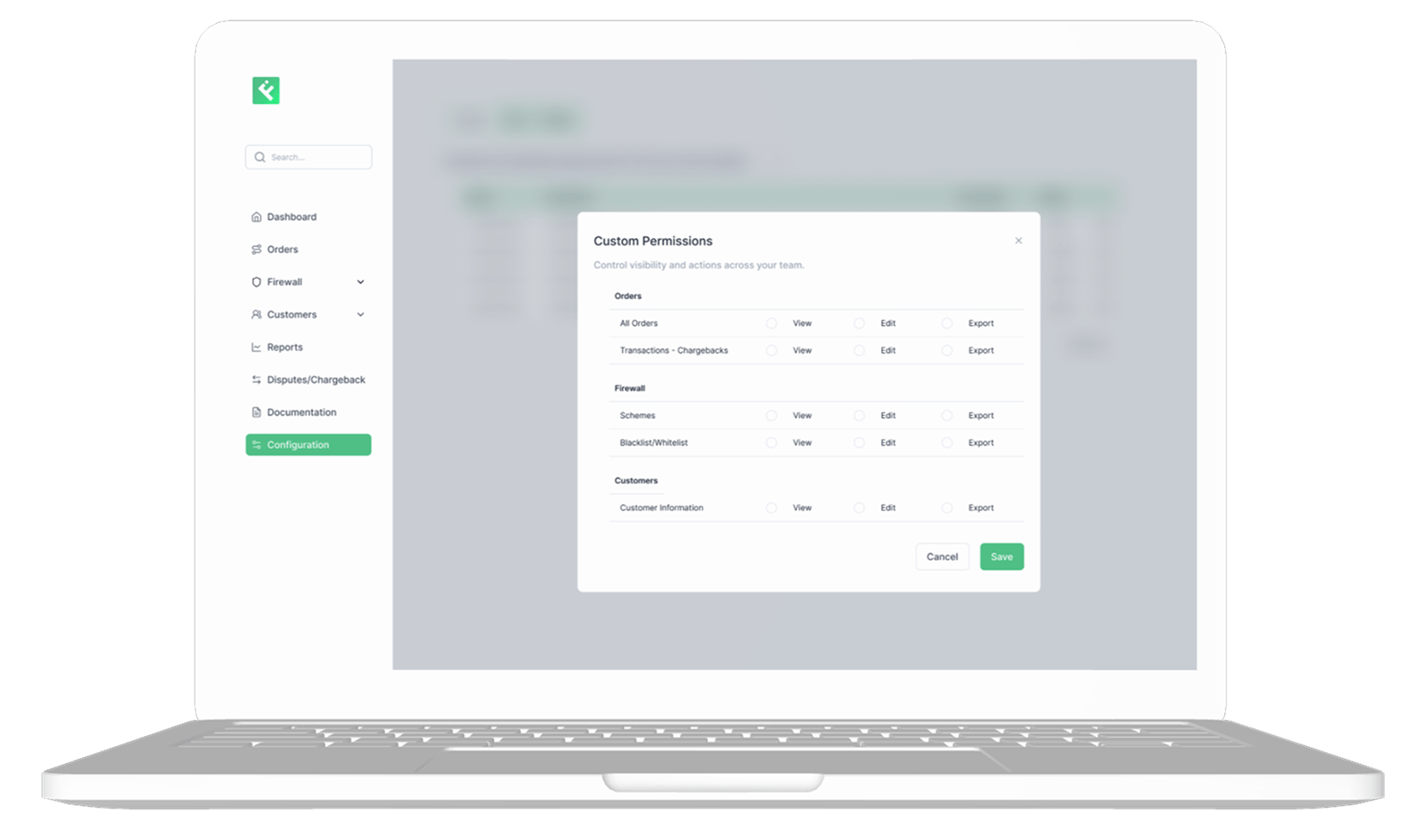
- Improve customization and role-based workflows